

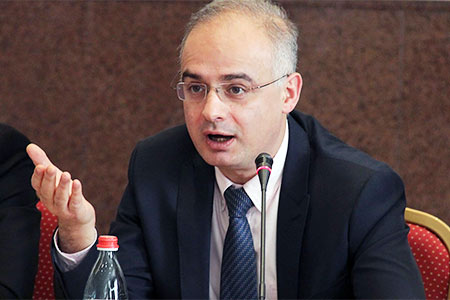
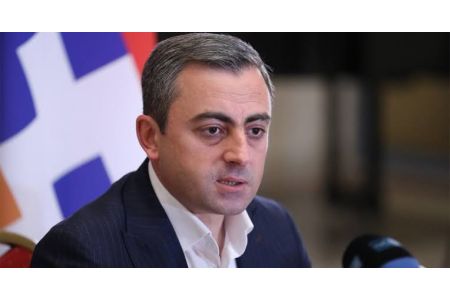
ArmInfo. Deputy chairman of the Armenian National Congress (ANC) party Levon Zurabyan explained how the draft of Armenia’s new Constitution weakens the protection of human rights in the country and effectively leads to the establishment of authoritarianism in it.
Thus, according to him, electoral rights are being restricted compared to the current Constitution. "If you have not resided permanently in Armenia for at least one year during the past two years, you will not be able to participate in nationwide elections or a referendum (Article
20). The draft of the new Constitution also permits deprivation of citizenship. Today, the Basic Law prohibits this. The draft allows citizenship to be revoked by court decision for crimes against the foundations of the constitutional order or state security (Article 24),"
— Zurabyan said on his Facebook page.
Furthermore, as the ANC deputy chairman continued, the list of grounds for deprivation of liberty is being removed from the Constitution. As the politician recalled, these grounds are currently listed in the Constitution itself, while the draft delegates their definition to law (Articles 20 and 23). "A number of guarantees of protection in criminal cases are no longer enshrined separately. This concerns protection through a lawyer of one’s own choice, sufficient time to prepare a defense, the questioning of witnesses, and the availability of a free interpreter (Article 20). Protection against administrative arbitrariness is being weakened. The draft does not separately enshrine a citizen’s right to review the documents in their case and to be heard before a decision affecting their rights is made (Article 20)," Zurabyan noted.
Moreover, according to him, the draft expands the personal powers of Armenian Prime Minister Nikol Pashinyan. "Pashinyan not only retains the foundation of the "super-prime-ministerial" system, but also expands the personal powers of the prime minister. In particular, his military powers are expanded and important guarantees of the independence of the judiciary are weakened. More power is concentrated in the hands of the prime minister, including within the country. He becomes commander-in-chief in peacetime as well. In the event of extreme necessity, he may decide to deploy the armed forces inside the country without a proposal from the defense minister. The government may repeal this decision after it has already been adopted (Article 57)," the ANC deputy chairman pointed out.
As the politician noted, political influence over the courts is also increasing. "All ten members of the Supreme Judicial Council will be elected by the National Assembly. Today, five of them are elected by the judges themselves. Judges of the current courts of first instance, appellate and cassation courts acquire the status of acting officials, while their continued tenure will depend on re-certification. All members of the re-certification commission will be elected by a majority of the National Assembly (Articles 58 and 85)," the ANC deputy chairman concluded.
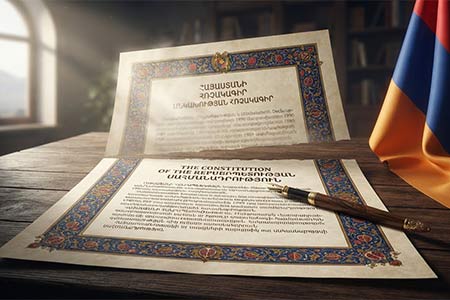
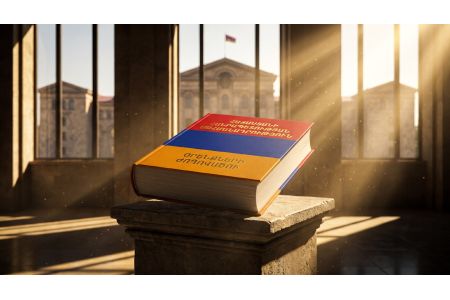
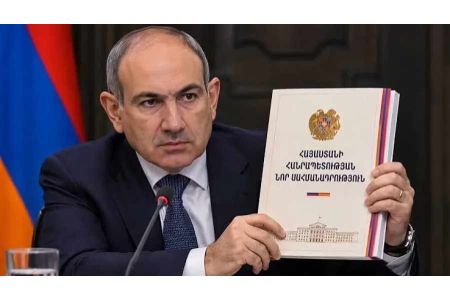
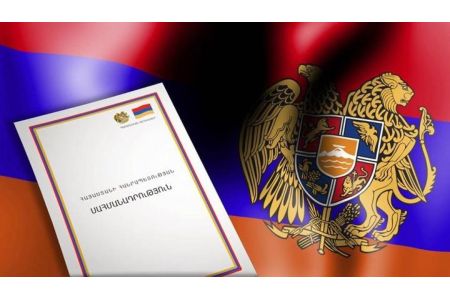
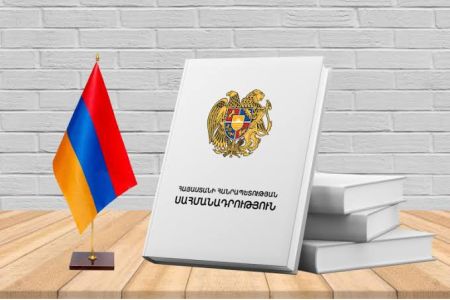
It should be noted that on the morning of November 23, Armenian Prime Minister Nikol Pashinyan announced that the draft of Armenia’s new Constitution had already been published on a website specially created for this purpose. After that, he also addressed the citizens of the Republic in a live broadcast. The draft of Armenia’s new Constitution envisages fundamental changes in the wording defining the foundations of Armenian statehood and the relationship between the state and the Armenian Apostolic Holy Church (AAC). The declaration of independence, which mentioned Nagorno-Karabakh and the international recognition of the Armenian Genocide in the Ottoman Empire, has disappeared from the country’s basic law. Notably, these are precisely the provisions whose removal from Armenia’s Constitution Azerbaijan and Turkey had sought. The draft of the country’s new Basic Law can be viewed by following the link: https://yourconstitution.am/hy.














 A security sphere expert commented on a video about Papikyan`s achievements during his five years as Defense Minister
 The future of the South Caucasus was discussed in the capital of a country whose problem remains unresolved — Davtyan
 An Armenian orientalist presented possible US actions against Iran
 Expert: Official Yerevan should not base its calculations in relations with Ankara on the "crack" in the Turkish-Azerbaijani alliance
 Armenia and Germany held consultations on defense issues
 Armenia wants to host COP-34 in 2029
 Speaker: Armenia has never approached the CSTO regarding the Karabakh issue
 Lavrov: Armenia will not be expelled from the CSTO
 Drmeyan: The ECHR rejected Azerbaijan`s appeal in the case of Artsakh Defense Army Major Hayk Toroyan
 "Strong Armenia": The brawl in parliament was staged to distract public attention from Pashinyan`s failed foreign policy
 Zakharova commented on the scandalous epithets of the governor of Armenia`s Shirak region about "Ivanov"
 Nikolai Bordyuzha proposed excluding Armenia from the CSTO.
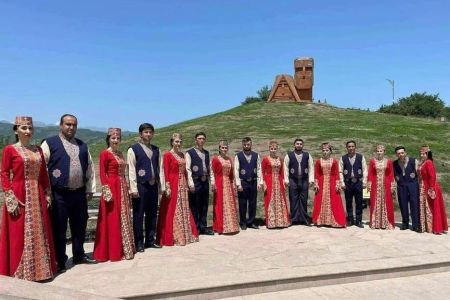 The participation of Artsakh ensembles in an international festival in Vienna was cancelled following the intervention of several foreign embassies
 Expert: It`s time for Armenia to move away from uncertainty and choose between West and East
 The Armenian Foreign Minister commented on the country`s return to work within the CSTO.