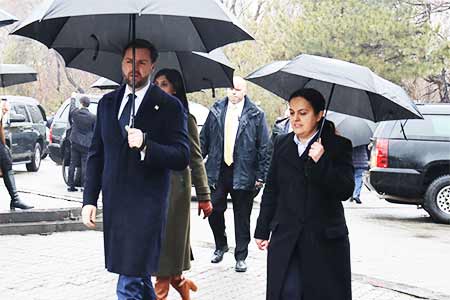
ArmInfo. The director of the Armenian Genocide Museum-Institute (AGMI) is set to be fired after she spoke to US Vice President J.D. Vance about the ethnic cleansing and genocide committed against the Artsakh population in September 2023.
Former AGMI Director Hayk Demoyan, in a post on his Facebook page, suggested that the topics Gzoyan raised during Vance's visit displeased Armenian Minister of Education, Science, Culture, and Sports (MSCS), Zhanna Andresyan, who, according to rumors, demanded Gzoyan resign. Demoyan reported that, according to recent news, a new director will soon be appointed, and expressed his conviction that the new leadership's main responsibility will be to conceal numerous crimes and to fail to respond to the unprecedented statements made by high-ranking Armenian officials regarding the historical fact of the Armenian Genocide.
"Apparently, the newly appointed director will be prohibited from speaking publicly on this topic or making undesirable statements, especially during ceremonial visits by foreign officials. Furthermore, he will be required to sign a written pledge not to use words and phrases such as 'Artsakh,' 'ethnic cleansing,' or 'cultural genocide,' so as not to jeopardize his ability to receive a salary from a government that questions the fact of the Genocide," Demoyan believes.
He also said that AGMI employees had appealed to Prime Minister Nikol Pashinyan to reconsider the position of the head of the Ministry of Education, Science, Culture and Sports regarding Gzoyan's dismissal. The former director of AGMI complained that the museum staff had essentially addressed a letter to someone who questions the fact of the Armenian Genocide and makes statements denying his involvement in what happened in Artsakh. "I believe that AGMI employees should have sent a letter of protest regarding Pashinyan and Andreasyan's statements desecrating the memory of the Genocide victims, threatening dismissal, instead of asking for something," Demoyan emphasized.
In 2025, the Armenian prime minister, at a meeting with representatives of the Armenian community in Switzerland, questioned the fact of the Armenian Genocide in the Ottoman Empire. In particular, he noted that it is first necessary to "understand what happened and why it happened, how the Armenian people perceived it, and through whom: how did it happen that in 1939 there was no agenda for the Armenian Genocide, but in 1950 it emerg











 Political analyst: Pashinyan- Putin phone call confirms deepening strategic rift between Yerevan and Moscow
 Opinion: Resolving conflict between Yerevan and Baku allows Washington to deprive Russia of key levers of influence in South Caucasus
 Narek Karapetyan will give up his parliamentary salary in favor of charitable contributions.
 Armenia and France discuss further development of strategic partnership and EU cooperation
  To overcome risks Armenia must reduce domestic escalation - expert
  Zatulin: Pashinyan was eager to get back to Russia because he actually lost the elections
 Pashinyan removed from INNOPROM guest list
 Zakharova: Armenia`s pro-EU pivot poses economic security risks to EAEU member states
 It`s time for South Caucasus countries to think of South Caucasus as single, unified region - RA premier
 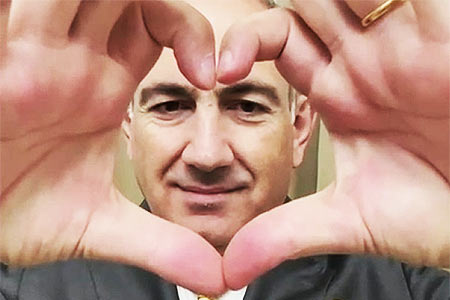 Pashinyan: Armenia and Azerbaijan should leave each other alone
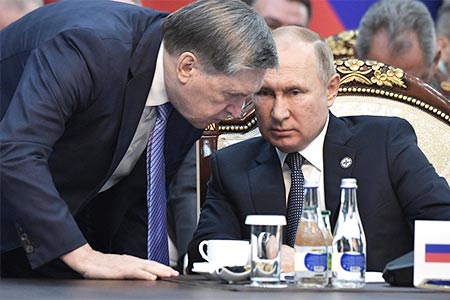 Moscow sees situation with Armenia as attempt to attack Russia-involving integration associations - Russian presidential aid
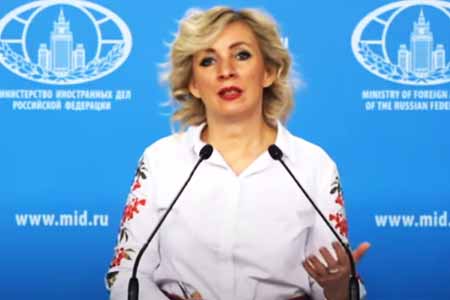 Zakharova: Armenia views relations with Russia as tool for financially securing reorientation toward EU
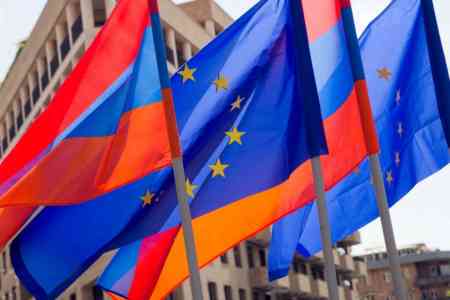 The Armenian Minister of Justice and the EU Ambassador discussed visa liberalization issues for Yerevan.
 Azerbaijan`s aggressive plans against Armenia became possible in wake of Pashinyan`s decisions on Artsakh - expert
  Zakharova: Russia sent a note of protest to Armenia over the act of vandalism at the "Mother Armenia" memorial in Gyumri