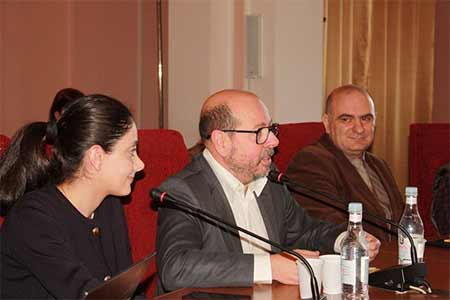
ArmInfo.The National Academy of Sciences of Armenia (NAS RA) hosted a presentation-discussion of the book "Conflict, Space, and Transnationalism: An Ethnography of the Second Nagorno-Karabakh War" (Palgrave Studies in Urban Anthropology, Palgrave Macmillan, 2025).
According to the NAS RA press service, the work is dedicated to a comprehensive study of the Nagorno- Karabakh conflict and the 44-day war. he work is dedicated to a comprehensive study of the Karabakh conflict and the 44-day war. The authors are Arsen Hakobyan, a leading researcher at the Department of Cultural Anthropology of the Institute of Archeology and Ethnography of the NAS RA, and Marcello Mollica, an associate professor of anthropology and ethnology at the University of Messina, Italy. The book was published by the prestigious scientific publishing house "Palgrave Macmillan".
The participants of the discussion were welcomed by Academician-Secretary of the Department of Armenian Studies and Social Sciences of the NAS of the Republic of Armenia Yuri Suvaryan. "This book is a serious scientific achievement in Armenian studies. It considers the personal component of the war and has remarkable conclusions. The work tries to resolve many issues. I hope that the book will receive its deserved assessment also in the field of awards. I congratulate the authors on the publication of this valuable work and wish them new creative achievements," said Academician Yuri Suvaryan.
Pavel Avetisyan, Vice President of the RA National Academy of Sciences, Scientific Director of the Institute of Archeology and Ethnography of the RA National Academy of Sciences, noted that the book is primarily about the problem of societies transformed through war. "This conflict is multifaceted, and its discussions should be conducted from different perspectives. The work carried out within the framework of this international cooperation is one of the best examples. Such work should be done a lot, this tragedy should become a subject of discussion from all perspectives," said Pavel Avetisyan.
Arsen Hakobyan and Marcello Mollika previously authored the book "Syrian Armenians and the Turkish Factor Kessab, Aleppo and Deir ez-Zor in the Syrian War." The book on the Syrian War shows how identity and belonging become the target of cross-border attacks, reproducing the memory of the Genocide and the same threats to survival, with the role and participation of the Turkish factor. While working on this book, the second Karabakh war broke out, and the Turkish factor played a decisive role in the 2020 Karabakh war. And the epilogue of the book on the Syrian War begins with a description of the Armenian- Azerbaijani border clashes of July 2020, where for the first time the tendencies of the transnationalization of the conflict appear through the export of violence from Syria.
"Before the start of the Second Karabakh War, researchers from the Institute of Archeology and Ethnography of the RA NAS conducted fieldwork in Nagorno-Karabakh, which, as Arsen Hakobyan notes, was the last fieldwork of Armenian ethnographers in pre-war Karabakh. "In 2020, during the war, we received an offer from the same publishing house to continue researching the issue. The cities of Hadrut, Shushi, and Stepanakert had become targets during military operations. In November-December 2020, we began discussing and shaping the content of the project, which was later adopted by the editorial board as the main structure and questioning of the book," Arsen Hakobyan said.
The author noted that the book discusses war and crisis within the framework of urban anthropology. Cities and territories are not just physical spaces here, but are also important in terms of relationships for a given community. "If we study the issue from that perspective, we see that the first protest movements begin in the cities of Stepanakert, Hadrut, Yerevan. Later, the first cases of violence also occur in the cities of Sumgait, Kirovabad, and Baku. They are the subject of separate discussion in the work. The Baku massacres of 1990 end the chain of urban violence and massacres, which later grow into military operations. Then we move on to the first Karabakh war, the events of the April 2016 war, and in a similar process we reach the second Karabakh war, focusing on urban territories. Stepanakert is considered important as a political center, the axis and symbol of political identity, the second Armenian capital. Shushi is presented in the context of ethno-religious diversity and the conflicts arising from that diversity. Then we move on to the transnational nature of the 2020 war. And the last part of the work is about cultural filtering, since the concept of cultural genocide provides an opportunity to discuss the connection between territory, culture and crisis, dictated by the challenges of war. We have discussed several realities here: the role of important holy places and territories during the war and post-war developments. During the analysis of the events, already during the conclusion, we found such an interesting phenomenon: neither the keys to Gandzasar, nor the keys to Dadivank, nor the keys to Amaras were handed over. We hope that these undelivered keys will provide an opportunity for their return. This is how we summed up the work," Arsen Hakobyan presented.
The book's Italian co-author, Marcello Mollica, noted: "One of the main ideas of this book is transnationalism. In the previous book, the idea of transnationalism was defined, opened up, and there were some predictions that came true during the second Karabakh war. It was mainly the arrival of external actors and their important role. The last chapter of the book was dedicated to mapping transnationalism, as well as the impact of conflicts in other regions on the Nagorno-Karabakh conflict. Of of course, with this we also entered the field of international relations. I think it was important to broaden the subject matter further, not excluding other disciplines. It was also important to include history, because it is impossible to understand the Karabakh conflict without taking into account its historical development." During the discussion, the participants presented their observations and addressed the existing issues.


















 Expert: Gagik Tsarukyan embodies post-Soviet model of big business-state relations; this model is used in many other post-Soviet countries
 Expert: Azerbaijan promoting aggressive plans against Armenia at state level
 Iranologist: Baku`s propaganda of might masks the country`s inability to provide water to its own population
 Political analyst: Russia intends to determine which "Camp" Armenia will choose through a referendum
 Narek Karapetyan will give up his parliamentary salary in favor of charitable contributions.
 Armenia and France discuss further development of strategic partnership and EU cooperation
  To overcome risks Armenia must reduce domestic escalation - expert
  Zatulin: Pashinyan was eager to get back to Russia because he actually lost the elections
 Human rights activist Ruben Melikyan dismissed from YSU
 Zakharova: Armenia`s pro-EU pivot poses economic security risks to EAEU member states
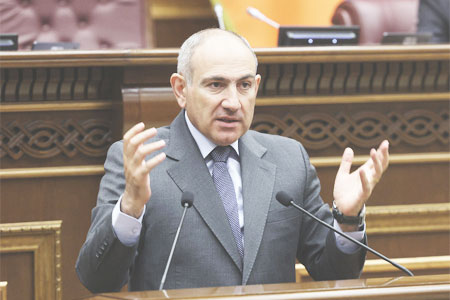 It`s time for South Caucasus countries to think of South Caucasus as single, unified region - RA premier
  Pashinyan: Armenia and Azerbaijan should leave each other alone
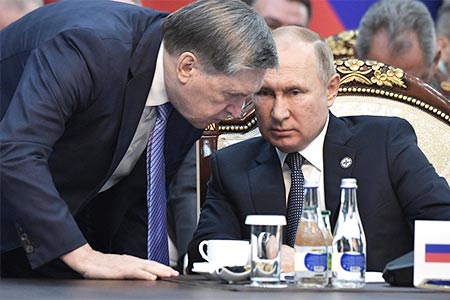 Moscow sees situation with Armenia as attempt to attack Russia-involving integration associations - Russian presidential aid
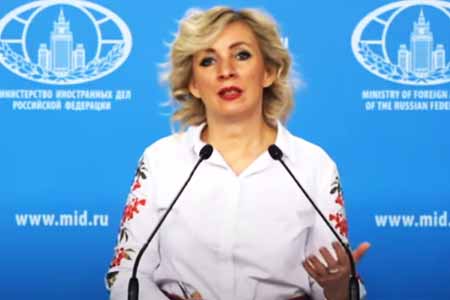 Zakharova: Armenia views relations with Russia as tool for financially securing reorientation toward EU
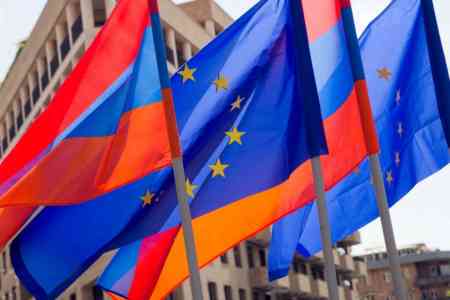 The Armenian Minister of Justice and the EU Ambassador discussed visa liberalization issues for Yerevan.