



ArmInfo. In Armenia, the greatest concern should be about the developments around Iran. This was written by expert Suren Sargsyan on his Facebook account.
"First of all, we need to understand that at the moment the Trump administration does not have a clear strategy regarding Iran. This is evident from the statements and positions of various representatives of the Trump team regarding the American policy towards Iran. If the Trump administration decides to normalize relations with Iran, this means negotiations that will lead to clear agreements. I am sure that the Iranian side will comply with these agreements. I am also sure that Trump will also preserve the agreements, since his previous decision to withdraw from the nuclear deal with Iran was due to the fact that he did not sign this agreement and believed that it did not meet the interests of the United States," the expert noted.
He called for not being surprised by the fact that the issue of bypassing Resolution 907 or leaving it in force could also become an extremely important indicator here. The security assistance provided to Azerbaijan, according to the expert, has always been provided not against Armenia, but against Iran. "Actually, the Americans have never denied this. Therefore, if the Trump administration provides assistance to Azerbaijan, this means that some active actions against Iran are still possible. On the other hand, according to unconfirmed information that appeared in the American press, Trump asked the Russian president to act as a mediator in the possible process of normalizing relations between Iran and the United States. This circumstance also indicates that the prospect of normalizing relations between Iran and the United States still remains. This, of course, is an optimistic trend, especially given the statement by the head of intelligence Gabbard that at this stage Iran is not creating nuclear weapons. All this forced Trump to give Iran two months to begin negotiations. I would like to emphasize once again that the Trump administration's policy towards Iran is not yet complete. Following the American press, we can conclude that the Trump administration has not yet developed a final policy and a clear strategy on the Iranian issue and is in a wait-and-see mode. There is no shortage of "hawkish" figures on Iran in Trump's team, but there are also many supporters of negotiations (here we should again recall Gabbard's cold statement). It is noticeable that in recent days the American diplomatic apparatus has been actively working with Turkey, trying to prevent a possible escalation in our region. A possible escalation could not only negatively affect the Russian-American negotiations (after all, a global conflict is forming right under Russia's nose, to which Moscow cannot remain indifferent), but also seriously complicate possible negotiations between the United States and Iran. It is obvious that as a result of possible actions against the Syunik region of Armenia, Iran will be forced to take certain steps to prevent the loss of its external border, which will ultimately lead to the involvement of Turkey. Israel will certainly benefit from such a development of events," the expert notes.
He did not rule out the existence of states that are negatively disposed towards the possible normalization of US-Iran relations. And this concerns not only Israel, but also Turkey, since as a result of normalization of relations with Iran, Turkey's role and importance in the region for the US will significantly decrease, while Iran's regional role will increase significantly. And for Turkey, Iran is the main competitor.
"Another fact: no matter how much Israel influences Trump, the latter is in no hurry to take steps towards Iran that, in his opinion, will not meet the interests of the United States. Ultimately, the deal between Iran and the US does not meet the interests of Israel, but the same cannot be said about the United States, especially when considered in the context of containing China. Let's not forget that in any case, the "America First" principle applies to Trump, and Israel's interests do not always 100% coincide with the interests of the United States," Sargsyan wrote.
























 Political Scientist: As long as the opposition remains silent, Pashinyan can use Plan B and secure a constitutional majority
 US-Iranian memorandum more beneficial for Iran from political and economic perspective - expert
  Political analyst: While Pashinyan pledges peace with Azerbaijan, Baku continues promoting the "Western Azerbaijan" project
 Political analyst: In light of new realities, Yerevan may propose advancing peace process with Baku without constitutional referendum
 Present-day geopolitical competition shifts from territorial control to infrastructure flows
 Zakharova: Russia sent a note of protest to Armenia over the act of vandalism at the "Mother Armenia" memorial in Gyumri
 Artsakh`s Cultural Heritage Ombudsman called on Moscow to respond to destruction of WWII monuments by Azerbaijan in occupied NKR
 Prosecutor General`s Office petitions Central Electoral Commission for criminal prosecution of Robert Kocharyan
 Dutch Prime Minister expresses his support for Armenia`s democratic reform and economic diversification agenda
 Heritage: It`s time for Armenia`s opposition to present people with legitimate alternative to power
 RA Security Council Sec, Assistant to President of Azerbaijan hold negotiations in Dilijan
  CEC Neutralizes PAP: Three Political Forces to Enter Armenian Parliament Following Election Vote
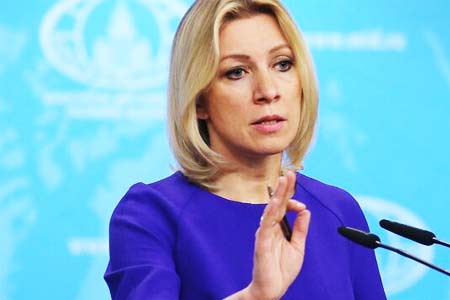 Elections in Armenia were accompanied by unprecedented pressure on opposition, RF MFA spokesperson claims
  Expert: Even OSCE observers recorded numerous violations during elections in Armenia
  Moscow to await official results of Armenian elections - Peskov
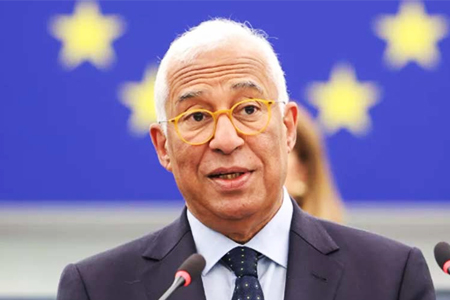 Antonio Costa: EU to deepen its partnership with Armenia, expanding cooperation in energy, trade, and digitalization
 Israeli MFA congratulates Pashinyan
 Turkish MFA comments on results of Armenian elections
  Zakharova: International observers cannot ignore `flagrant violations` in Armenian elections