
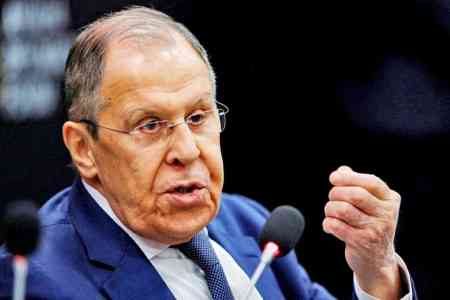
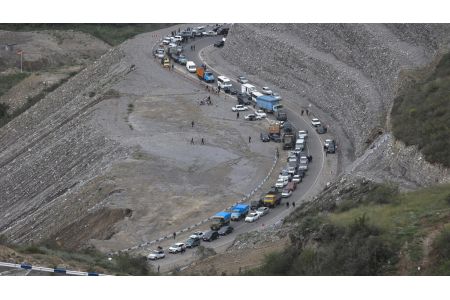
ArmInfo.The incident near the village of Tegh is an X-ray of the Armenian-Azerbaijani conflict. A similar opinion is shared by Sergey Markedonov, Candidate of Historical Sciences, Leading Researcher at the Center for Euro-Atlantic Security at the Institute for International Studies at MGIMO. The expert noted that incidents in Nagorno-Karabakh and along the Armenian-Azerbaijani border are not rare.
In this regard, he stated with regret that they are perceived by politicians, experts and the media as a routine.
<However, the incident near the village of Tegh requires close attention. This settlement is located 10 km from the Armenian city of Goris and 40 km from Stepanakert, the capital of the unrecognized Nagorno- Karabakh Republic. During the clashes on April 11, 7 people were killed there. The Tegh incident was the first turning incident of its kind after the deployment of the EU Mission in Armenia (EUMA) on Armenian territory.
The following information was posted on the mission's website the very next day: "The incident once again demonstrated that in the absence of a delimited border, it is necessary to respect the 1991 line." The EU also called on the conflicting parties "to intensify negotiations on the delimitation of the border, as well as its readiness to "support this process">, Markedonov noted. According to him, one of the key considerations of official Yerevan when deploying European observers on the border with Azerbaijan was the thesis about the inefficiency of the CSTO.
<The organization, they say, only calls for restraint of the participants in the conflict, does not name the perpetrators, and reacts sluggishly. But in practice it turned out that EUMA is also not in a hurry to name the culprit with all clarity. Moreover, calls for negotiations and the need to refrain from incidents in the future are so-so, know-how. How many similar statements have been made by the OSCE Minsk Group over the years. Russia, as expected, took advantage of the embarrassment of the European mission and pointed out this fact to its partners from Yerevan, as well as urbi et orbi. Note that the issue of hosting the CSTO mission is still being discussed. And, in the words of the official representatives of the Russian Foreign Ministry, " the ball is in Yerevan's court ", he added.
<But is it only the embarrassment of the Europeans that is the whole point? Doesn't the Tegh incident bring up deeper layers? In our opinion, it brings up. And several ones at once. Firstly, the conflict between Armenia and Azerbaijan is not Karabakh, the configuration of the interstate border and the political and geographical outlines of the two countries is the key topic, and there are many villages like Tech>, he stressed.
Secondly, Markedonov continued, Baku and Yerevan themselves cannot and do not want to reach a mutually beneficial compromise, different "brokers" do this for them, to the extent of their understanding of honesty and their own ideas about beauty.
"Third, geopoliticization is strong as never before in the conflict. Until 2022, the West and Russia did not openly compete in the Armenian-Azerbaijani direction. Now the notorious <the zero sum game> has come here. Now any embarrassment and any oversight of the geopolitical opponent is used against him. And believe me, the West will be happy to savor any difficulties of the RCC in Karabakh. And here is the question of pragmatics. Is it worth focusing on geopolitical relish, or is it better not to scold someone else's, but to actively promote one's own (with the mind, of course, understanding other people's miscalculations and failures)>, he believes. Thus, the Russian expert believes, Tegh provides a qualitative X-ray of the current phase of the Armenian- Azerbaijani conflict. <And the diagnosis is very difficult!>, he summed up.













 South Caucasus is entering a new phase of turbulence - ex-official
  Expert: Azerbaijan`s political leadership states `occupation of Armenia is their new national goal`
  Expert: Armenian society falls into security trap of totalitarianism
 Expert: Pashinyan`s visit to Russia creates prerequisites for restoring dialogue, but thaw in relations is more symbolic
 Human rights activist Ruben Melikyan dismissed from YSU
 Pashinyan removed from INNOPROM guest list
 Zakharova: Armenia`s pro-EU pivot poses economic security risks to EAEU member states
 It`s time for South Caucasus countries to think of South Caucasus as single, unified region - RA premier
  Pashinyan: Armenia and Azerbaijan should leave each other alone
 Moscow sees situation with Armenia as attempt to attack Russia-involving integration associations - Russian presidential aid
 Zakharova: Armenia views relations with Russia as tool for financially securing reorientation toward EU
 The Armenian Minister of Justice and the EU Ambassador discussed visa liberalization issues for Yerevan.
 Azerbaijan`s aggressive plans against Armenia became possible in wake of Pashinyan`s decisions on Artsakh - expert
  Zakharova: Russia sent a note of protest to Armenia over the act of vandalism at the "Mother Armenia" memorial in Gyumri
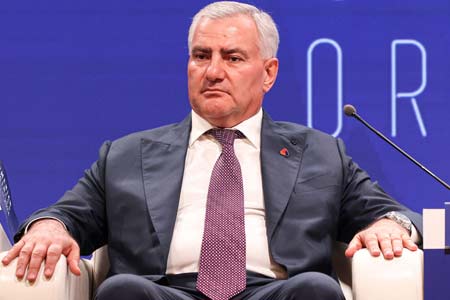 Samvel Karapetyan proposes creating a post-election opposition coalition
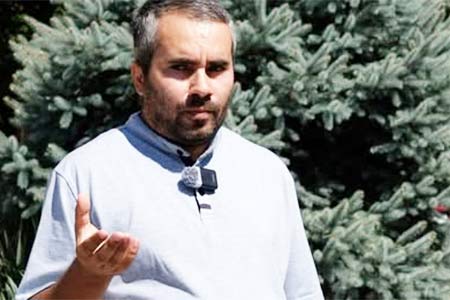 Artsakh`s Cultural Heritage Ombudsman called on Moscow to respond to destruction of WWII monuments by Azerbaijan in occupied NKR
 Prosecutor General`s Office petitions Central Electoral Commission for criminal prosecution of Robert Kocharyan
 Dutch Prime Minister expresses his support for Armenia`s democratic reform and economic diversification agenda
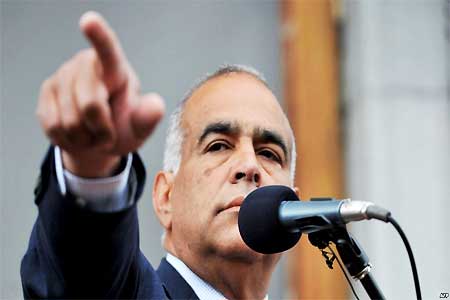 Heritage: It`s time for Armenia`s opposition to present people with legitimate alternative to power