


ArmInfo. The detention of Strong Armenia party leader Samvel Karapetyan is yet another manifestation of Armenian Prime Minister Nikol Pashinyan's authoritarian aspirations aimed at preserving his own power. This opinion was expressed by Artak Beglaryan, head of the Artsakh Union public organization, following the month-long arrest of Samvel Karapetyan.
Furthermore, according to him, Pashinyan is thus attempting to fulfill another demand from Azerbaijani President Ilham Aliyev to amend the Armenian Constitution. "The detention of Samvel Karapetyan is yet another manifestation of Pashinyan's authoritarian aspirations aimed at fulfilling Aliyev's demands and preserving his own power. The solution is to unite opposition forces and create an effective system of struggle. "All political prisoners must be immediately released, and Aliyev's plans must be thwarted," Beglaryan wrote.
As a reminder, on November 4, Strong Armenia party spokesperson Aghavni Sukiasyan reported that investigators from the Investigative Committee of Armenia had been conducting searches since early morning at the homes of Strong Armenia bloc leader Samvel Karapetyan and Strong Armenia parliamentary faction leader Narek Karapetyan. She noted that searches were also being conducted at other addresses associated with Karapetyan's family. Later, Investigative Committee spokesperson Kima Avdalyan reported that searches were being conducted simultaneously at 65 addresses. Following the searches, NSS officers detained Samvel Karapetyan and escorted him out the back door of his home. The Investigative Committee of Armenia subsequently announced that Samvel Karapetyan is accused of embezzling loan funds received for the needs of Electric Networks of Armenia CJSC. (ESA). Thirty-five other people were detained along with him. On November 5, a court ruling replaced Samvel Karapetyan's house arrest with a one-month detention.
Notably, the arrest followed Pashinyan's statement that if the parliamentary opposition resisted the adoption of the new Constitution, the ruling majority would begin to generate public pressure. He also noted that "the authorities could formulate a proposal for the parliamentary opposition regarding the new Constitution that they would be unable to refuse."









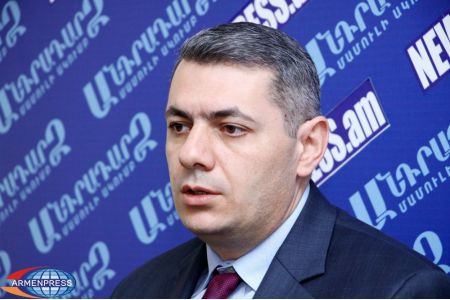 Expert: Official Yerevan should not base its calculations in relations with Ankara on the "crack" in the Turkish-Azerbaijani alliance
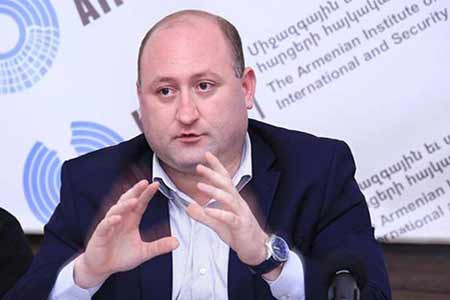 International expert: Trump is entering a "lame duck" period of rule
 Speaker: Armenia has never approached the CSTO regarding the Karabakh issue
 Lavrov: Armenia will not be expelled from the CSTO
 Drmeyan: The ECHR rejected Azerbaijan`s appeal in the case of Artsakh Defense Army Major Hayk Toroyan
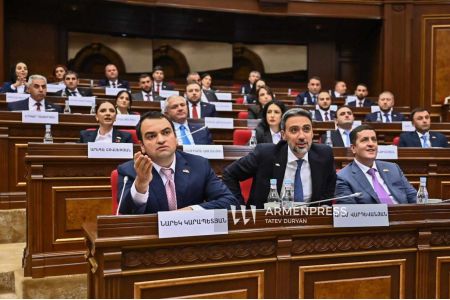 "Strong Armenia": The brawl in parliament was staged to distract public attention from Pashinyan`s failed foreign policy
 Zakharova commented on the scandalous epithets of the governor of Armenia`s Shirak region about "Ivanov"
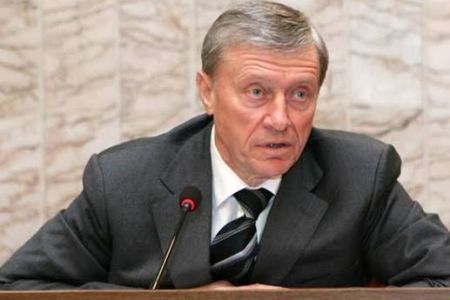 Nikolai Bordyuzha proposed excluding Armenia from the CSTO.
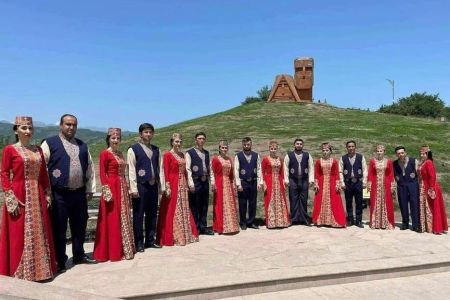 The participation of Artsakh ensembles in an international festival in Vienna was cancelled following the intervention of several foreign embassies
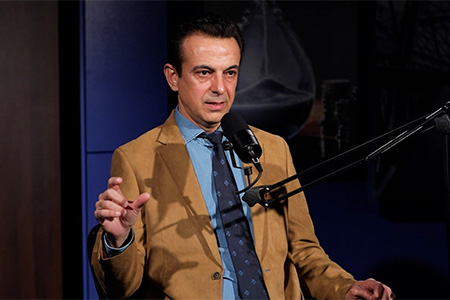 Expert: It`s time for Armenia to move away from uncertainty and choose between West and East
 The Armenian Foreign Minister commented on the country`s return to work within the CSTO.
 The Artsakh Public Council expressed outrage at the UN Secretary-General`s behavior
 Lukashenko called for Armenia to assume the CIS presidency in 2029
 Dmitry Medvedev predicted a Ukrainian-like fate for Armenia amid the country`s shift in foreign policy
 Russian Security Council: In Armenia, they want to force Russian asset owners to dispose of their assets
 Zakharova: Russia ready to discuss with Armenia the prospects for expanding military cooperation as part of a review of bilateral ties
 Tevanyan: Armenia, like Ukraine and Moldova, is being drawn into the EU’s global war