
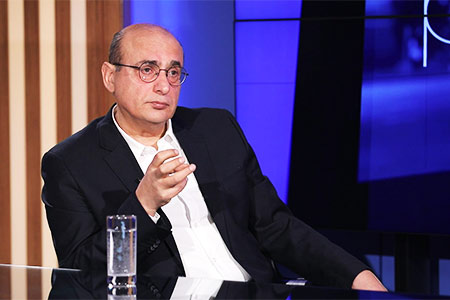
ArmInfo.Political scientist Stepan Danielyan used specific examples to explain why the Armenian opposition, which entered parliament following the latest elections to the National Assembly of Armenia on June 7, should not relinquish its mandates.
In a post on his Facebook page, the expert recalled a similar situation in Georgia. "The opposition in Georgia also did not relinquish its mandates. However, this in no way prevents the Georgian authorities from doing what they want," the political scientist noted.
Furthermore, he noted that the resolution or freezing of the Ukrainian and Iranian conflicts will lead to a new regional situation. This, in turn, according to Danielyan, will lead to the loss of the Civil Contract party's foreign policy strategy and the loss of interest from its "patrons." "At the same time, the squandering of the Armenian budget in recent months, the questionable parliamentary elections, and the presence of a significant portion of society that hates the Civil Contract party could lead to the fall of power, either peacefully or not," the political scientist added.
In this regard, Danielyan expressed his conviction that for a legitimate change of power to take place, there must be an opposition in parliament. "For a legitimate transition of power in the country, there must be a parliamentary opposition, as well as the necessary pole for a possible 'rat race.' It will be interesting to hear a reasoned opposing point of view," the expert concluded.
As a reminder, parliamentary elections were held in Armenia on June 7, 2026. Voter turnout was 58.97%. According to preliminary data from Armenia's Central Election Commission, Nikol Pashinyan's ruling Civil Contract party, Samvel Karapetyan's Strong Armenia bloc, and second president Robert Kocharyan's Armenia bloc have all entered parliament. The remaining candidates scored below the required threshold of 4% for parties and 8-10% for blocs. Notably, businessman Gagik Tsarukyan's Prosperous Armenia party lost its 4% threshold after the Central Election Commission adjusted preliminary vote counts for the country's parliamentary elections. Therefore, the party will not enter the new parliament.
It should be noted that from early morning on election day, observers and journalists reported numerous violations by the ruling party during the voting process. Thus, Pashinyan's party has the opportunity to single-handedly form the country's government by securing a majority of seats in Armenia's parliament. Pashinyan solemnly announced this late at night, when data from only about 10% of polling stations had been processed.


















 Expert: Current process is not about peace, but implementing Azerbaijan`s wishlist
 Expert: Real peace unattainable until Armenia-Azerbaijan agreement is signed and ratified
 TRIPP`s proximity to Iranian border could slow its implementation - expert
  Who and why is sacrificing RA National Security Service`s reputation? - expert
  Tehran creating security environment in which sustainable shipping in Strait of Hormuz difficult to imagine without its direct participation - expert
  Arrested Armenian oligarch on economy and new jobs
  NA Vice Speaker candidate believes his wife`s salary as director of HayPost is the lowest in the company`s history
 RF Permanent Representative: There is no CSTO-Armenia conflict
 Moscow: NATO seeking to "Pull" Armenia away from CSTO Allies
  Political analyst: Russia intends to determine which "Camp" Armenia will choose through a referendum
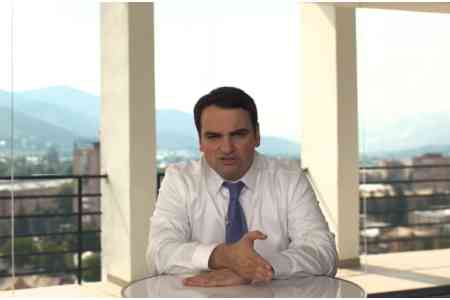 Narek Karapetyan will give up his parliamentary salary in favor of charitable contributions.
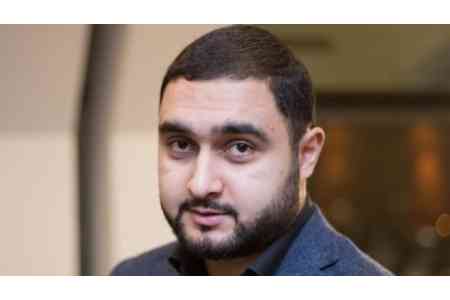 Armenian analyst: Developing relations with Europe and the U.S. must not jeopardize relations with regional powers
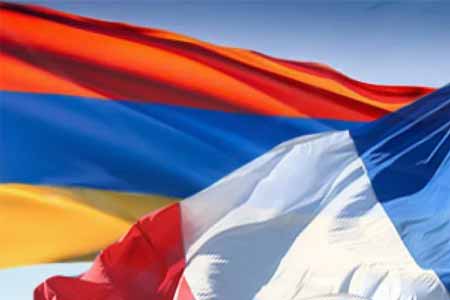 Armenia and France discuss further development of strategic partnership and EU cooperation
 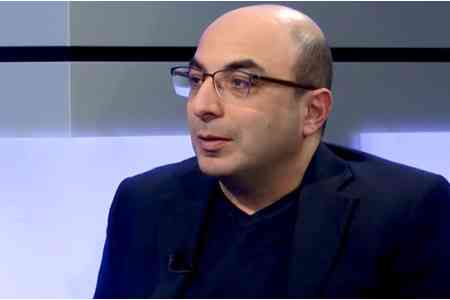 To overcome risks Armenia must reduce domestic escalation - expert
 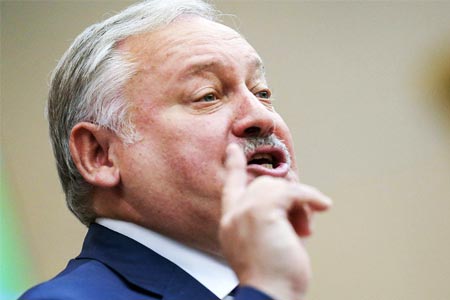 Zatulin: Pashinyan was eager to get back to Russia because he actually lost the elections
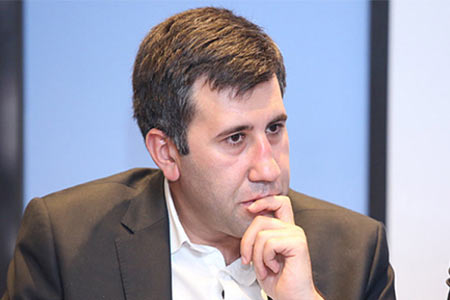 Human rights activist Ruben Melikyan dismissed from YSU
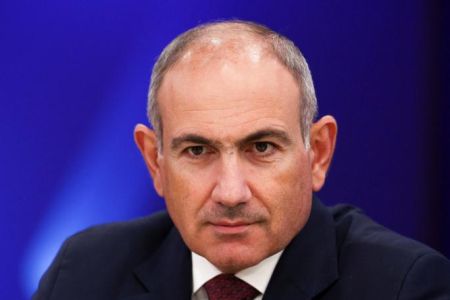 Pashinyan removed from INNOPROM guest list
 Zakharova: Armenia`s pro-EU pivot poses economic security risks to EAEU member states
 It`s time for South Caucasus countries to think of South Caucasus as single, unified region - RA premier
  Pashinyan: Armenia and Azerbaijan should leave each other alone