
ArmInfo. Monitoring the voting process at polling stations with large concentrations of Armenian military personnel proved challenging during the country's parliamentary elections, according to Lyudmila Markina, a representative of the Russian Central Election Commission (CEC). Markina shared these observations during a press conference on June 8.
Markina clarified that as part of a Commonwealth of Independent States (CIS) monitoring mission, she observed the elections alongside 30 colleagues from the Russian electoral system. The group visited 200 polling stations across nine regions of Armenia. Among their primary findings, Markina pointed to inadequate training among local election commission members, which resulted in voting delays.
"All violations that could be addressed on the spot were promptly corrected. When that wasn't possible, we formally recorded them," Markina stated. "We specifically noted the voting arrangements for large groups of military personnel at several stations. Monitoring this process was difficult due to the classified nature of the information. Nevertheless, this remains a highly sensitive issue that raises concerns regarding full procedural compliance for this category of voters."
Markina also criticized the vote-counting process, describing it as unnecessarily complex. "This places a colossal burden on commission members. Despite their extensive efforts, precinct election commission members frequently became confused while counting votes and compiling protocols. In our view, this procedure was simply insufficiently rehearsed," she said.
Markina also reported a highly contentious incident in the Armavir Region, where members of the observer group had identified procedural shortcomings and brought them to the election commission's attention. "At polling station 16/25, individuals without identification badges approached us and demanded that we destroy our observation report," Markina stated. "Furthermore, the authorities responsible for maintaining public order at the station failed to intervene. It was a difficult situation, but we managed to resolve it successfully," she concluded.
Recall, parliamentary elections were held in Armenia on June 7, 2026. The Armenian opposition reported that large groups of military personnel were brought to polling stations in the Syunik region just before the polling stations closed at 8:00 PM. By law, everyone already at the polling stations must cast their vote, even after the polling stations closed. Their voting lasted until midnight, and at some polling stations, it ended even later. Opposition representatives beleive this incident is yet another example of the country's authorities using administrative resources to influence the election outcome. It should be added that, according to preliminary data from the Central Election Commission of Armenia, based on the vote count from all 2,005 polling stations, Nikol Pashinyan's ruling Civil Contract party, Samvel Karapetyan's Strong Armenia bloc, and second president Robert Kocharyan's Armenia bloc are all in parliament. The remaining candidates scored below the required threshold of 4% for parties and 8-10% for blocs. The election turnout was 58.97%. A total of 1,476,597 citizens voted nationwide, out of 2,505,228 eligible voters. On election day, observers and journalists reported numerous voting violations by the ruling party starting early in the morning. Despite these reports, Pashinyan's party secured a majority of seats in the Armenian parliament, allowing them to form a single-party government. Pashinyan solemnly announced the victory late that night, when data from only about 10% of polling stations had been processed.











 Iranologist: Baku`s propaganda of might masks the country`s inability to provide water to its own population
 Analyst: Continued tensions between Yerevan and Moscow could entail new restrictive measures from Russia
 Political analyst: Russia intends to determine which "Camp" Armenia will choose through a referendum
 Armenia and France discuss further development of strategic partnership and EU cooperation
  To overcome risks Armenia must reduce domestic escalation - expert
  Zatulin: Pashinyan was eager to get back to Russia because he actually lost the elections
 Human rights activist Ruben Melikyan dismissed from YSU
 Pashinyan removed from INNOPROM guest list
 Zakharova: Armenia`s pro-EU pivot poses economic security risks to EAEU member states
 It`s time for South Caucasus countries to think of South Caucasus as single, unified region - RA premier
  Pashinyan: Armenia and Azerbaijan should leave each other alone
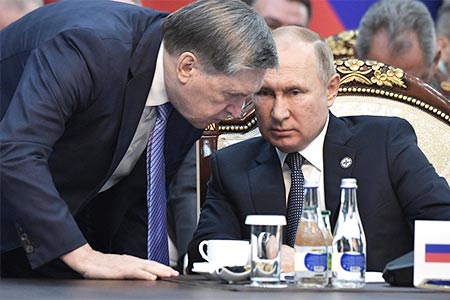 Moscow sees situation with Armenia as attempt to attack Russia-involving integration associations - Russian presidential aid
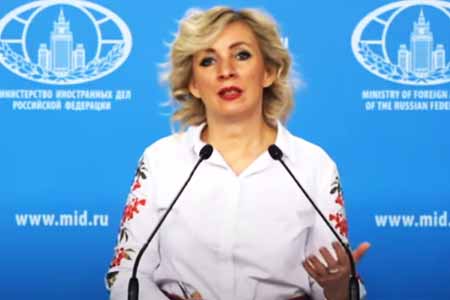 Zakharova: Armenia views relations with Russia as tool for financially securing reorientation toward EU
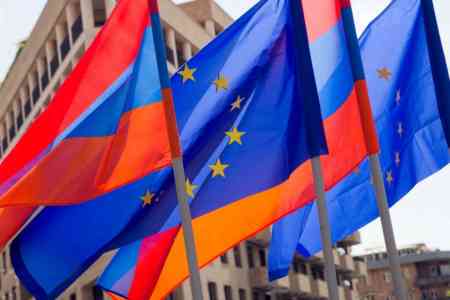 The Armenian Minister of Justice and the EU Ambassador discussed visa liberalization issues for Yerevan.
 Azerbaijan`s aggressive plans against Armenia became possible in wake of Pashinyan`s decisions on Artsakh - expert
 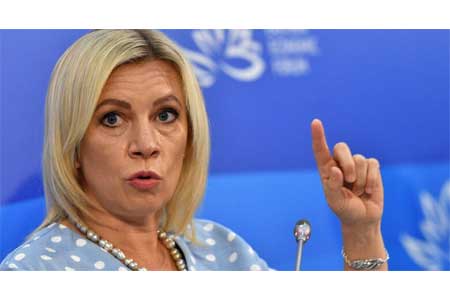 Zakharova: Russia sent a note of protest to Armenia over the act of vandalism at the "Mother Armenia" memorial in Gyumri