


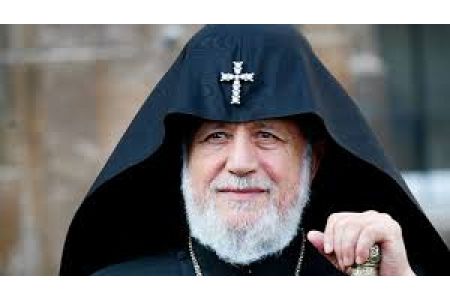
ArmInfo. During a meeting with a group of editors from several media outlets, his Holiness Karekin II, Supreme Patriarch and Catholicos of All Armenians, firmly asserted that the Armenian Apostolic Church (AAC) will not permit external interference in its internal affairs.
"We do not know the outcomes of the upcoming elections, but the Church stands ready to defend its rights and will not allow any entity or authority to interfere in its internal governance or subjugate it to their will," His Holiness stated. "Our position is strong and clear—for the good of the people and the Homeland," the Catholicos emphasized at a press conference convened on May 2. He recalled that for centuries, the AAC has fulfilled a vital mission: shaping spiritual values, preserving national identity, and ensuring the vitality of the Armenian people. He emphasized that the Church will unwaveringly continue this historic mission under all circumstances, trusting in the Heavenly Father and the Armenian people.
When questioned about how he would respond if state authorities attempted to arrest him, Karekin II revealed that more than a dozen criminal cases have already been initiated against members of the clergy. He characterized these actions as part of a broader effort to subjugate the Church and force the removal of its leadership. "If the authorities decide to arrest the Catholicos of All Armenians, we will comply and seek justice through all available legal mechanisms, but we will never abandon the mission of the Armenian Apostolic Church," His Holiness declared.
He further emphasized that forcing a papal resignation is legally complex, as the AAC operates strictly under its own internal canons. "We will not succumb to any pressure or violence," he added. Addressing government allegations that the Church is overstepping into the political arena, Karekin II firmly rejected the claim, clarifying that the AAC does not engage in partisan politics. "Political engagement is the domain of political parties," the Catholicos explained. "The Church is a pan- Armenian spiritual institution. Alignment with, or patronage of, any specific party would mean ceasing to be the Church of all Armenians."
While reiterating that the Church remains strictly detached from partisan political activity, the Catholicos emphasized its fundamental moral obligation to speak out on critical national matters. He stated that the Church has a primary responsibility to articulate its position on issues that directly impact society, generate significant public outcry, or pose existential threats to the country. When asked about the international community's reaction to recent government actions against the AAC, His Holiness acknowledged a lack of state-level intervention. Despite formal letters being dispatched to various global agencies, international bodies have largely treated the developments as an internal domestic matter.
However, the Catholicos highlighted strong solidarity from global religious institutions: "Church structures, including the World Council of Churches and the Conference of European Churches, have responded appropriately and expressed their formal support for our Church," the Catholicos noted. Hr praised the stance of all the clergy of the Armenian Apostolic Church and expressed his gratitude, including Catholicos Aram I of the Great House of Cilicia, Archbishop Nourhan Manoukian, head of the Jerusalem Patriarchate, and Archbishop Sahak Mashalian, head of the Ecumenical Patriarchate "Our Church is united," the Catholicos concluded.
At the same time, he found it difficult to pinpoint the exact reason behind the Armenian authorities' attacks on the Church, noting that historically, whenever a government perceives an strengthening of the Church's role within the state, pressure invariably follows. The Catholicos struggled to specify what precisely triggered the authorities' pressure on the Armenian Apostolic Church (AAC)—whether it was the Church's defense of the interests of the people of Artsakh and its advocacy for their rights on various international platforms, its raising of awareness regarding the issues of Armenian prisoners of war held in Baku, or its efforts to protect the destroyed Armenian heritage in occupied Artsakh. It should be noted that since May 2025, the Armenian authorities have launched an active anti-church policy and are seeking the resignation of Catholicos of All Armenians Karekin II, who is elected to this position for life. As part of this campaign, both clergy and citizens who support the Church are being persecuted. Currently, four high-ranking clergy are imprisoned on trumped-up charges as part of this anti- church campaign. Moreover, the Armenian prime minister and 10 schismatic bishops signed a framework document on the so-called renewal of the Armenian Church.
It should be noted that, according to the Constitution, Armenia is a secular state, where church and state are separate. At the same time, the "exceptional mission" of the Armenian Apostolic Church (AAC) in preserving national identity is recognized.














 Expert: Even OSCE observers recorded numerous violations during elections in Armenia
  Armenia`s ex-minister of justice calls on opposition to honestly answer questions troubling Armenian citizens
 Lawyer: according to preliminary results, Pashinyan`s party lacks 2/3 majority necessary to amend Armenia`s Constitution
 Moscow to await official results of Armenian elections - Peskov
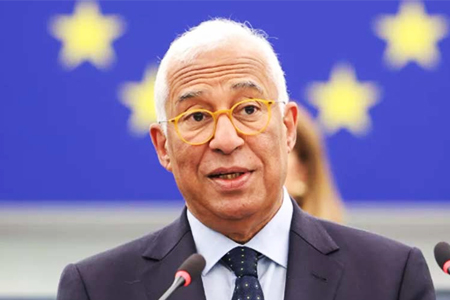 Antonio Costa: EU to deepen its partnership with Armenia, expanding cooperation in energy, trade, and digitalization
 Israeli MFA congratulates Pashinyan
 Turkish MFA comments on results of Armenian elections
 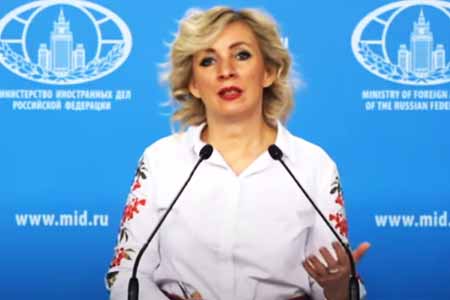 Zakharova: International observers cannot ignore `flagrant violations` in Armenian elections
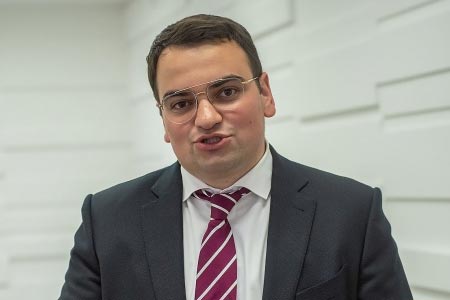 Strong Armenia to issue statement after vote count completed - Narek Karapetyan
 Russian Senator: Opposition complaints regarding election violations by ruling party remain unanswered
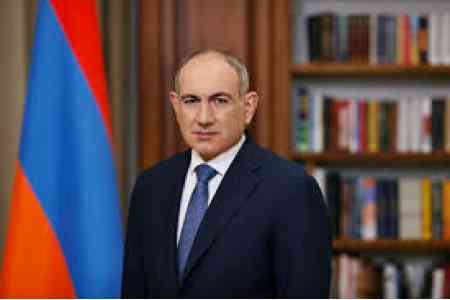 RA premier receiving congratulations on his victory in parliamentary elections
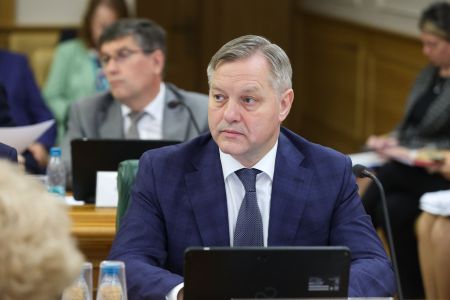 Head of IPA CIS Council Secretariat: Extremely difficult atmosphere during parliamentary elections campaign in Armenia accompanied by mass arrests
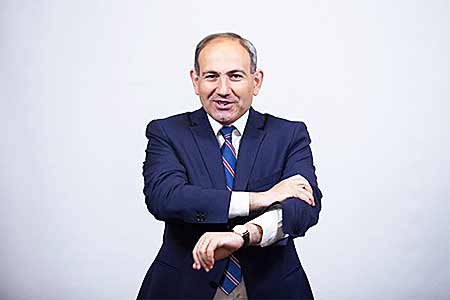 Pashinyan`s party leads with 51.13% based on vote counts from 533 polling stations
 Voting in parliamentary elections in Armenia ends
  Strong Armenia: Administrative Court not providing judicial decisions to citizens wishing to vote in parliamentary elections