


ArmInfo.Official Ankara is using the prospect of opening its borders as bait to extract further concessions from Armenia. This opinion was expressed by Armenian Turkologist Varuzhan Geghamyan on his Facebook page.
Meanwhile, as the expert pointed out, Turkey, of course, has not yet opened a single railway with Armenia, let alone a border. Moreover, Geghamyan is confident that the Turkish side is not preparing for such a step, and there is a very compelling and pragmatic reason for this. "After the collapse of the USSR and Armenia's independence, Turkey has waged war against our country using an economic blockade, which is an instrument of military soft power. However, this instrument fails to serve its original purpose, as its effectiveness from a purely economic perspective is highly questionable. It is used by official Ankara as a propaganda and psychological tool," the Turkologist noted.
As Geghamyan explained, since 1991, the Armenian people have been constantly convinced that after the borders with Turkey open, they will enjoy economic prosperity. This implies that all of Armenia's economic problems stem from the closed borders with Turkey. He noted that this propagandistic and manipulative thesis, unfortunately, has become deeply ingrained in the perceptions of Armenian society and even the national elite, who view the opening of the borders with Turkey as an absolute blessing, without any real, scientific evidence to support this. "This issue is based entirely on common sense. This logic is fueled by claims like 'an open border is better than a closed one,' 'there are no closed borders in the 21st century,' and other unfounded assertions. Meanwhile, the main beneficiary of this propaganda and the widespread dissemination of this thesis is Turkey. According to this propaganda logic, Turkey's military move is viewed as purely economic and something 'we really need.' Therefore, official Ankara is using the prospect of opening its borders as bait to extract further concessions from Armenia," the expert explained.
As Geghamyan noted, in terms of effectiveness, this is a much better tool than opening the border itself. This is precisely why, he said, since the 44-day war in 2020, the de facto Armenian authorities have been making new concessions to Turkey and Azerbaijan daily, yet the issue of opening the borders and unblocking roads remains unresolved. "Turkey is using the border issue as a tool of diplomatic and political pressure. It's no coincidence that for six years now, only pointless Armenian-Turkish meetings and discussions have been taking place, while the borders have not opened. The goal of all this propaganda is to create the illusion in Armenian society that 'the border will open soon' and 'we will live well.' Meanwhile, in reality, Armenia is making new concessions," the Turkologist emphasized.
In this regard, he urged people not to succumb to Turkish propaganda, noting that it is harmful not only to health but also to security. To support his words, he recalled the fate of Syria. "In 2009, the people of Syria rejoiced when the borders with Turkey finally opened and visa requirements were lifted. Exactly a year and a half later, terrorists invaded Syria through Turkish territory, coordinated by Turkey, across those very same open borders, plunging the giant Arab state into a war from which it has yet to emerge, despite the territorial and human losses," the expert concluded.
As a reminder, Serdar K?l?c, Turkey's special representative in the negotiations on the normalization of relations between Armenia and Turkey, announced in January 2024 that Armenia and Turkey had reached an agreement to give new impetus to efforts to open the border to third-country nationals.
Turkish Foreign Minister Mevlut Cavusoglu announced the launch of the normalization process on December 13, 2021. He also emphasized that Ankara would act in coordination with Azerbaijan regarding steps to normalize relations with Armenia. Several rounds of talks between the special representatives of Armenia and Turkey have since taken place. The parties agreed to open the border to third-country citizens back in the summer of 2022, but the border remains inoperative.



















 Expert: Even OSCE observers recorded numerous violations during elections in Armenia
  Armenia`s ex-minister of justice calls on opposition to honestly answer questions troubling Armenian citizens
 Lawyer: according to preliminary results, Pashinyan`s party lacks 2/3 majority necessary to amend Armenia`s Constitution
 Politician: With high voter turnout, current government to no chance
 Moscow to await official results of Armenian elections - Peskov
 Antonio Costa: EU to deepen its partnership with Armenia, expanding cooperation in energy, trade, and digitalization
 Israeli MFA congratulates Pashinyan
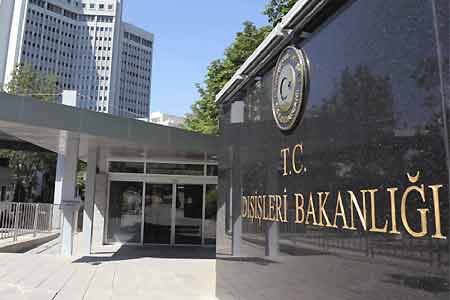 Turkish MFA comments on results of Armenian elections
 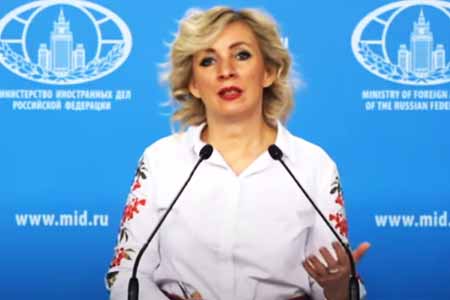 Zakharova: International observers cannot ignore `flagrant violations` in Armenian elections
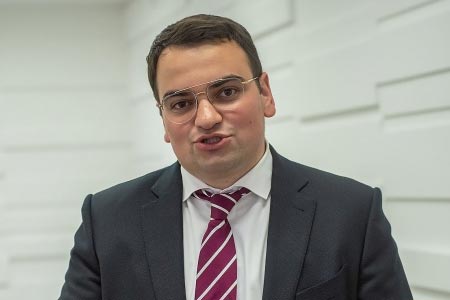 Strong Armenia to issue statement after vote count completed - Narek Karapetyan
 Russian Senator: Opposition complaints regarding election violations by ruling party remain unanswered
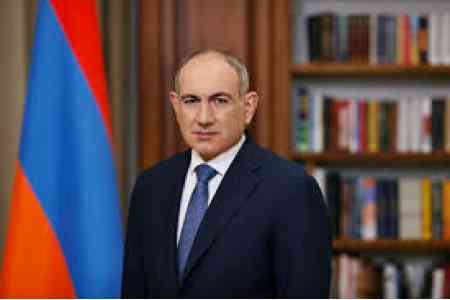 RA premier receiving congratulations on his victory in parliamentary elections
 Head of IPA CIS Council Secretariat: Extremely difficult atmosphere during parliamentary elections campaign in Armenia accompanied by mass arrests
 Pashinyan`s party leads with 51.13% based on vote counts from 533 polling stations
 Voting in parliamentary elections in Armenia ends
  Strong Armenia: Administrative Court not providing judicial decisions to citizens wishing to vote in parliamentary elections