

ArmInfo. It's clear that, given Tehran's loss of trust in Washington, American participation in the transportation project on Iran's northern borders will be viewed through the prism of potential security risks for the Iranian state. This was stated by Russian Ambassador to Armenia Sergey Kopyrkin in an interview with Iravunk, regarding the prospects of opening a transportation corridor in southern Armenia with Washington's participation.
The diplomat acknowledged that the significant progress in achieving peace between Armenia and Azerbaijan is positively impacting the situation in the South Caucasus region, particularly in terms of unblocking transportation routes. However, according to him, the waves of the Middle East crisis, caused by the escalation of tensions around Iran, which was attacked by the US and Israel, are reaching the Transcaucasus.
"The tense situation around one of the key waterways for the global economy - the Strait of Hormuz - is currently on everyone's lips.
Obviously, the surge in global prices for fuel, fertilizer, and food cannot help but affect the countries of the South Caucasus. In this regard, the Armenian leadership has already noted in the media that the deadlines for the Trump Road project are being pushed back. It is clear that, given Tehran's loss of trust in Washington, which was preparing military strikes under the guise of negotiations, American participation in the transportation project on Iran's northern borders will be perceived through the prism of possible risks to the security of the Iranian state," the diplomat said. He also recalled that aspects of the situation surrounding the road through Meghri were discussed in detail in an interview with Russian Deputy Prime Minister Alexey Overchuk to the TASS news agency on April 2 of this year, where he noted, in particular, that this route could open up the possibility of improving transport connectivity between Russia and Armenia.
When asked to discuss the key priorities for the development of Armenian-Russian relations, Kopyrkin recalled that bilateral relations are multifaceted and comprehensive, based on a solid legal framework accumulated over 34 years. The diplomat added that the list of areas is quite broad - from politics, security, and economics to energy, culture, science, tourism, and more.
"At the same time, it's clear that our countries, regional realities, and the global situation are changing. All of this requires adapting our maturing interstate cooperation. We are committed to moving forward based on the positive, accumulated potential. Powerful unifying factors such as shared history, geography, economic affinity, people-to-people contacts, and the role of the diaspora remain. We have everything we need to develop new cooperation parameters and algorithms based on a pragmatic alignment of interests. The main thing is to demonstrate political will and maintain a focus on results. We have such a commitment," the Russian ambassador concluded.
On January 14, the Armenian Foreign Ministry published the framework document signed with the American side in Washington for the implementation of the Trump Route for International Peace and Prosperity (TRIPP). The 12-page document outlines the project's main goals and operating mechanisms.
Among other things, the document emphasizes Armenia's intention to sanction and support the creation of the TRIPP Development Company. The company is expected to be responsible for developing the TRIPP project, receiving an initial development right for a period of 49 years. Armenia intends to offer the United States a 74% stake in TRIPP Development Company, retaining 26%. This partnership is expected to be extended for another 50 years, with an additional ownership stake granted to the Armenian government, bringing its stake to 49%.
As a reminder, on August 8, 2025, Armenian Prime Minister Nikol Pashinyan and Azerbaijani President Ilham Aliyev signed a seven-point joint "Declaration of Peace" in Washington. It provides for a joint appeal to the Organization for Security and Cooperation in Europe (OSCE) to terminate the OSCE Minsk Process and related structures, as well as the creation of a transport corridor through Armenian territory that will connect Azerbaijan with its Nakhichevan exclave, surrounded by Armenia, Turkey, and Iran.





















 Expert: Current process is not about peace, but implementing Azerbaijan`s wishlist
 Expert: Real peace unattainable until Armenia-Azerbaijan agreement is signed and ratified
 TRIPP`s proximity to Iranian border could slow its implementation - expert
  Who and why is sacrificing RA National Security Service`s reputation? - expert
  Tehran creating security environment in which sustainable shipping in Strait of Hormuz difficult to imagine without its direct participation - expert
  Arrested Armenian oligarch on economy and new jobs
  NA Vice Speaker candidate believes his wife`s salary as director of HayPost is the lowest in the company`s history
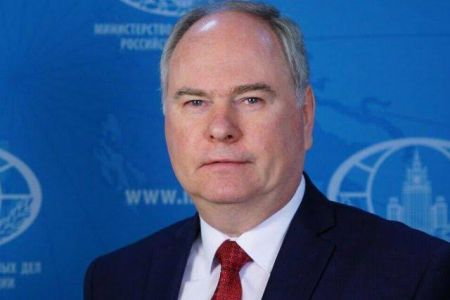 RF Permanent Representative: There is no CSTO-Armenia conflict
 Moscow: NATO seeking to "Pull" Armenia away from CSTO Allies
  Political analyst: Russia intends to determine which "Camp" Armenia will choose through a referendum
 Narek Karapetyan will give up his parliamentary salary in favor of charitable contributions.
 Armenian analyst: Developing relations with Europe and the U.S. must not jeopardize relations with regional powers
 Armenia and France discuss further development of strategic partnership and EU cooperation
  To overcome risks Armenia must reduce domestic escalation - expert
 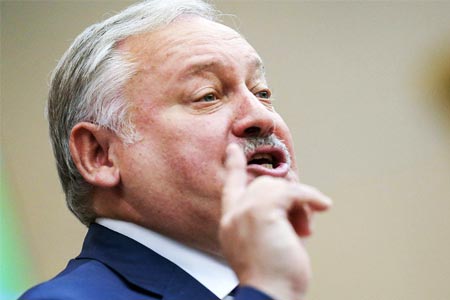 Zatulin: Pashinyan was eager to get back to Russia because he actually lost the elections
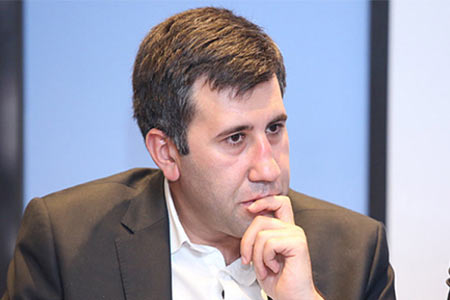 Human rights activist Ruben Melikyan dismissed from YSU
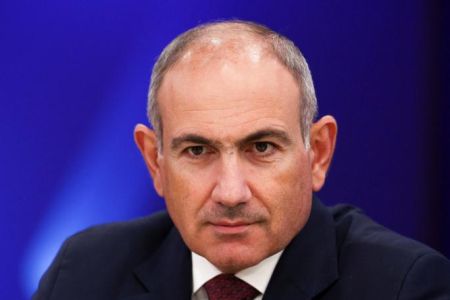 Pashinyan removed from INNOPROM guest list
 Zakharova: Armenia`s pro-EU pivot poses economic security risks to EAEU member states
 It`s time for South Caucasus countries to think of South Caucasus as single, unified region - RA premier
  Pashinyan: Armenia and Azerbaijan should leave each other alone